


Edited by
Natacha Souillard, Aix-Marseille University (IMSIC), France.
Amélie Coulbaut-Lazzarini, Grenoble Alpes University (GRESEC), France.
Céline Pascual Espuny, Aix-Marseille University (IMSIC), France.
ISBN : 9781836690207
Publication Date : April 2026
Hardcover 264 pp
170 USD
Co-publisher


Biodiversity is collapsing. It is increasingly necessary to rethink how contemporary societies relate to the living world. This is all the more important given that calls for change are still regularly downplayed – or even dismissed in the public sphere. The protection of natural environments and their inhabitants, both human and nonhuman, too often remains subordinate to economic considerations that are deemed to take precedence. The plant world occupies a unique place, one that is still rarely highlighted, given the many issues involved.
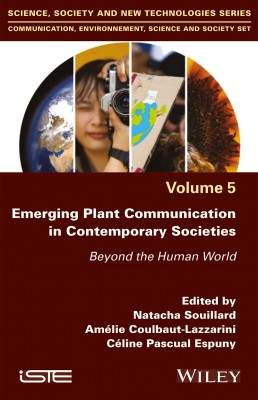
Emerging Plant Communication in Contemporary Societies opens up several avenues for reflection, through the prism of communication, to better understand the relationships our societies have with the plant world. Key topics include the ambivalence in the representation of green tourism, forests and heritage mediation of the plant world; encounters with emblematic plants; and the understanding of the mechanisms of plant communication and how it can shed light on our own communication systems. This collective work is an invitation to look beyond the human world.
Part 1. Semiotic Approaches to the Diversity of Forms of Discourse about and from the Plant World.
1. Inclusion of the Plant Kingdom in Communication about Reforesting: Semiotic Analysis, Andrea Catellani.
2. Phytosemiotics: Codes, Signs and the Acts of Transformation, Nicolas Engiar.
Part 2. Coconstructing a New Relationship with the Living World and Environmental Education.
3. Space to Spare: The Paradoxes of Tourist Communication, Erica Lippert.
4. Human–Plant Connections in Midmountain Regions: From Resource to Relatedness, Amélie Culbaut-Laarini.
5. Nature in Abandoned Ruins: Resource for Environmental Education, Nathanael Wadbled.
Part 3. Art and Mediation of the Plant World.
6.Representation of Plants in Autochthonous Documentary Filmmaking, Marine Brun-Franetti et Natacha Crulnik.
7. Art to Convey Biodiversity: Analysis of an Augmented-Reality Animated Sculpture, Marie-Caroline Hed, Sarah Labelle, Emma Laurent, Valérie Liani et Eva Sandri.
Part 4. Sensory Aspects and Narratives Surrounding Human–Nonhuman Relations.
8. The Lessons to Draw from Ayahuasca about the Knowledge of Togetherness, Philippe Hert.
9. Tasting Nature: Transforming the Meaning of Wine-Tasting Videos on YouTube, Pierre Besla.
Part 5. Plant Communication as a Means of Transforming Organizational Communication.
10. Uncertainty in Strategic Environmental Communication, Joshua T.L. Anderson, Matthew Eastin et Megan Lanica.
11. Biodiversity in Discourse Surrounding CSR: What Narrative Framework Is Needed to Prevent Biodiversity-Washing?, Céline Pascual Espuny et Catherine Loneux.
Natacha Souillard is an associate professor at Aix-Marseille University (IMSIC), France. Her research focuses on forms of participation, mobilization and discourse associated with socio-environmental issues.
Amélie Coulbaut-Lazzarini is an associate professor at Grenoble Alpes University (GRESEC), France. Her research focuses on environmental mediation and research-creation to help (re)establish links with living things.
Céline Pascual Espuny is a professor at Aix-Marseille University (IMSIC), France. She works on issues of behavioral change and the circulation of environmental issues in the public sphere.


